

Medina de Sousse
Along coast of Tunisia stands the Medina de Sousse, a fortress-city shaped by the early centuries of Islam. Rising under the reign of the Aghlabid dynasty between 800 and 909 AD, Sousse emerged as both a thriving commercial hub and a crucial shield against pirate raids and maritime invasions. Unlike many ancient cities altered by centuries of conquest, Sousse has beautifully preserved its original spatial layout and structural authenticity.

Here, multi-generational families inhabit traditional courtyard homes, their plain exterior doors concealing central, open-air courtyards engineered centuries ago to capture shade and preserve domestic privacy.


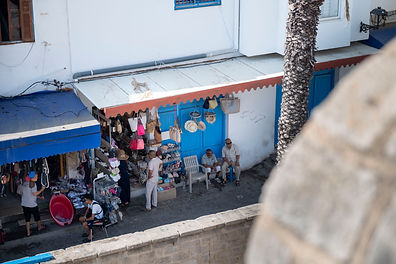
On the ground, daily routine moves on foot: elder residents exchange greetings in a fluid mix of Tunisian Arabic and French, children negotiate the stone cobbles, and the smell of fresh flatbread from neighbourhood bakeries drifts beneath the call to prayer echoing from the Great Mosque.



Walking through Sousse also means sharing the streets with hundreds of free-roaming cats—the city’s unofficial guardians. This presence is deeply woven into Sousse’s identity, blending practical history with cultural reverence. Centuries ago, cats served as vital defenders against rodents threatening trade and public health. Over time, this utility grew into a lasting affection rooted in Islamic tradition, which honours cats for their cleanliness. Today, an unspoken pact endures: shopkeepers set out fresh water, fishermen toss scraps from the daily haul, and residents care for them as cherished communal neighbours who lend the ancient medina its gentle, beating heart.

In Sousse, history and modernity coexist in a captivating spatial paradox, where time seems to fold in on itself across a single boulevard. Enclosed by massive 9th-century stone ramparts, the UNESCO-listed Medina remains an evocative maze of narrow alleyways, vibrant souks, the ancient Ribat fortress, and quiet courtyard homes that preserve the centuries-old rhythms of traditional life. Yet, as the modern city rapidly expands to support population growth, infrastructure needs, and tourism demands, urban planners face the constant struggle of preserving the Medina's fragile historic heritage.
